Vehicle Profile
Trailer width, overall height, bed height, rear-door arrangement, tail lift and fleet variation.

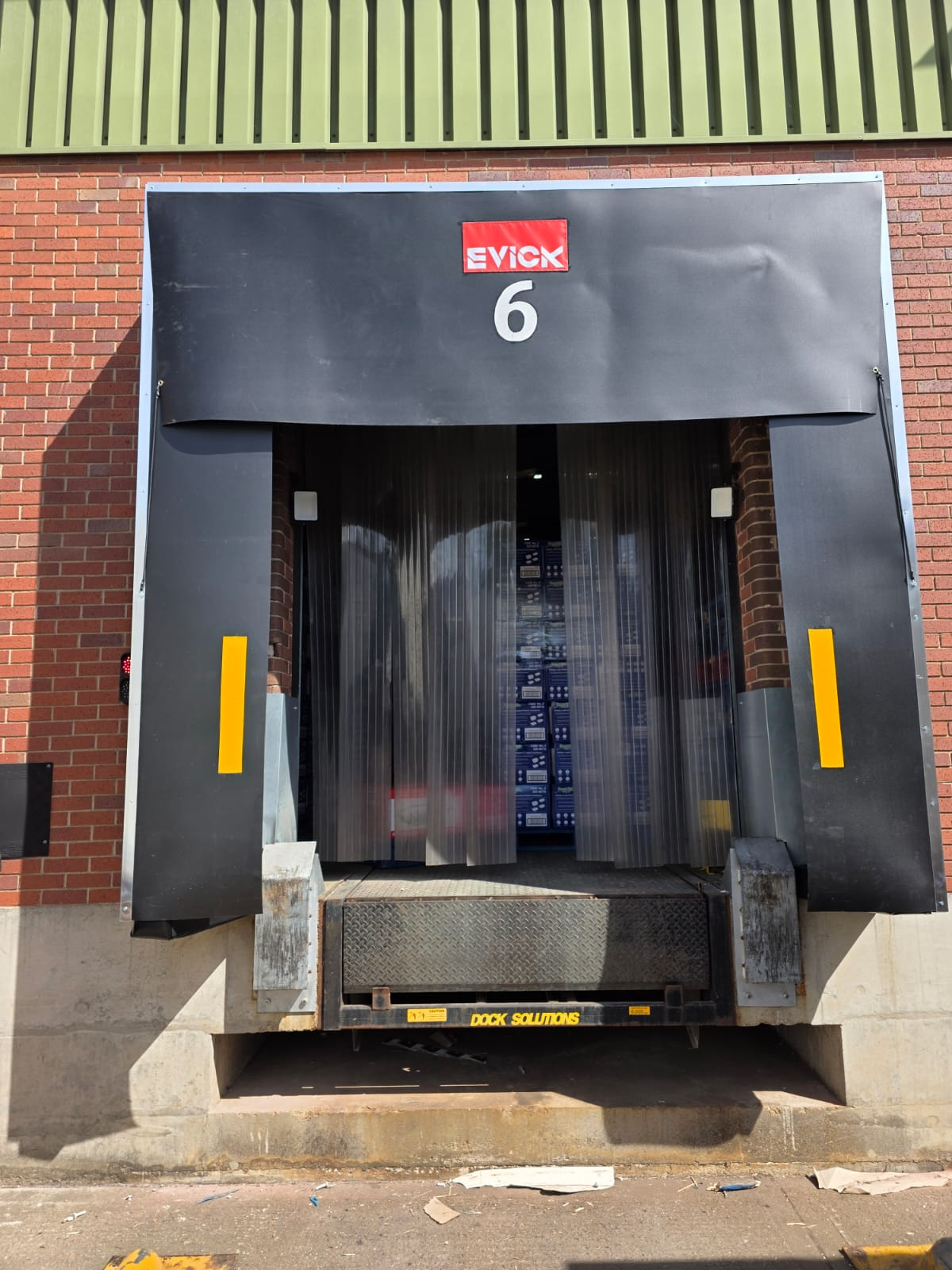
Reduce weather ingress, uncontrolled air exchange and exposure around docked vehicles with a solution selected for your fleet, opening and operation.
A dock shelter forms a protective interface around a correctly positioned vehicle, helping to shield people, products and the building from wind and rain.
The right design depends on much more than the opening size. EVICK considers vehicle heights and widths, docking frequency, tail-lift arrangements, temperature control, wall construction, projection and the way the bay is used. We can supply a shelter as a standalone product or coordinate it with the dock door, leveller, buffers, controls and vehicle-restraint equipment.
Our survey identifies the most suitable arrangement rather than forcing every loading bay into one standard design.
Retractable shelters use durable head and side curtains supported by a collapsible frame. They suit many mixed-fleet operations because the curtains overlap the sides and roof of vehicles across an agreed working range.
If a vehicle contacts the shelter incorrectly, the supporting structure is designed to retract or yield rather than behave like a rigid projection. Correct vehicle alignment and suitable dock buffers remain essential.
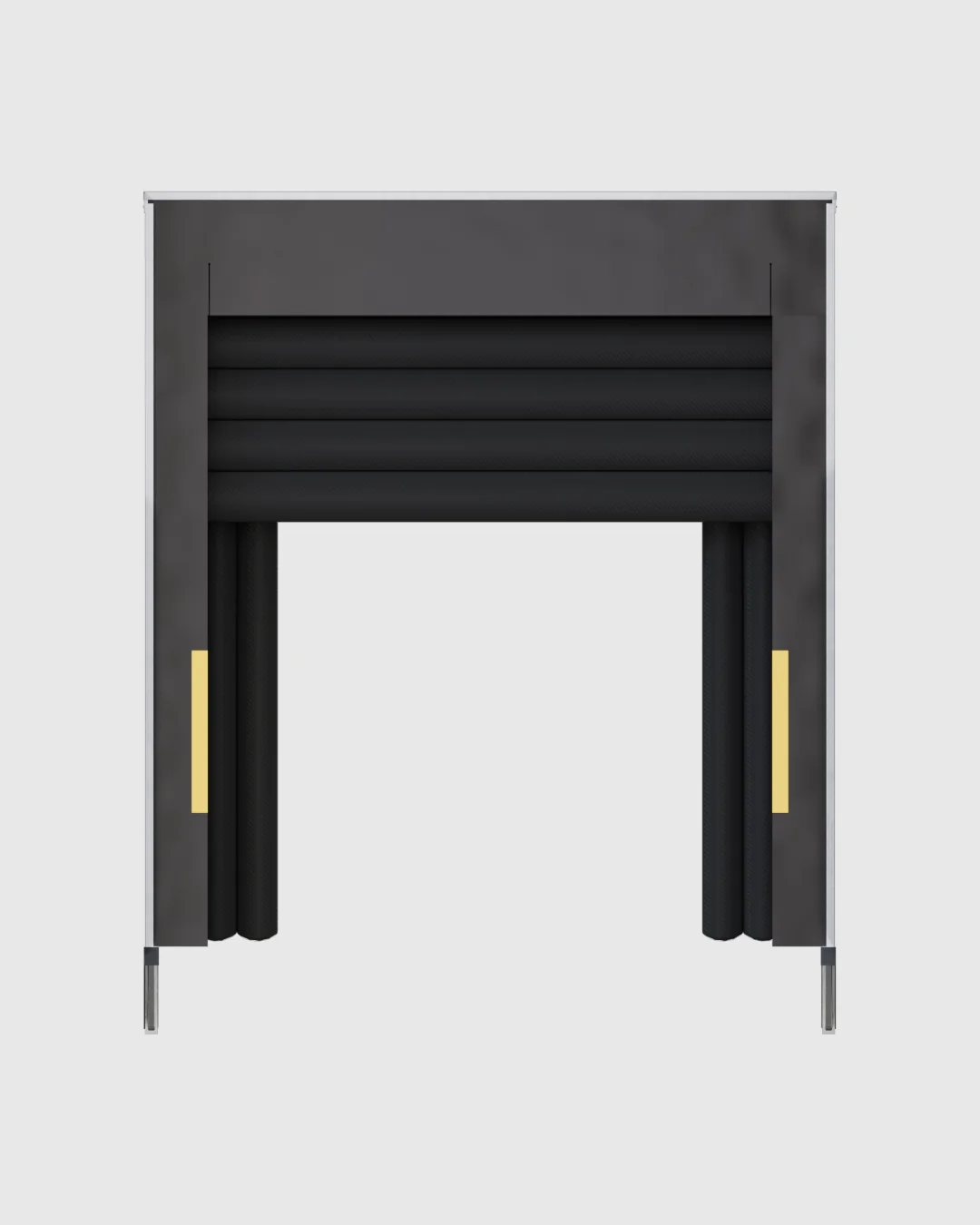
Inflatable shelters deploy around the vehicle after it has docked, creating a closer seal around the sides and top. They are particularly useful where energy control, temperature stability or hygiene is a priority.
Depending on the selected model, systems can be built into the facade or supplied as a projecting arrangement. The cushions retract before the vehicle departs, helping protect them from unnecessary wear.
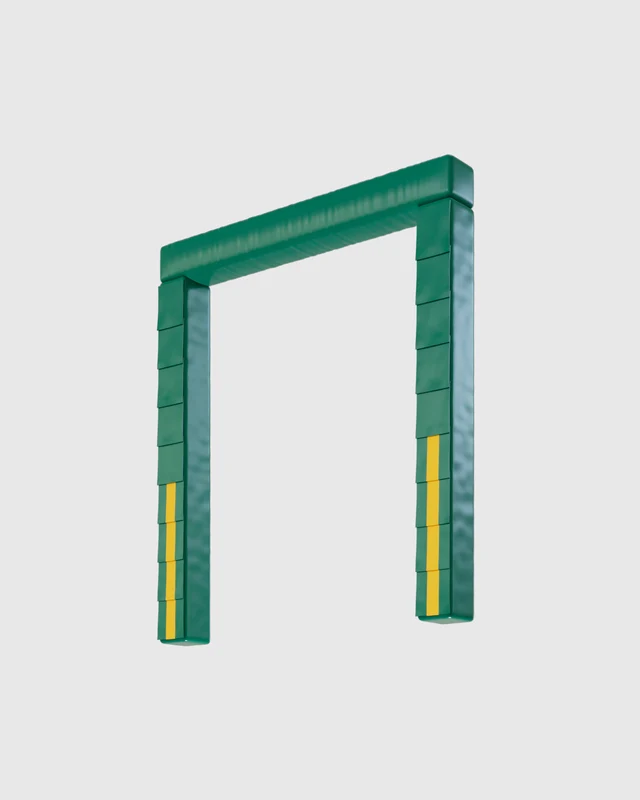
Cushion seals use resilient pads that compress against the rear of the vehicle. They can provide a close, straightforward seal where a dedicated or predictable fleet uses the bay and vehicle dimensions remain consistent.
They are less suitable where trailers vary substantially in height or width. Tail lifts, rear doors, swing clearance and the required loading aperture must all be reviewed before specification.
| Consideration | Retractable | Inflatable | Cushion Seal |
|---|---|---|---|
| Vehicle variation | Good across an agreed mixed-fleet range | Good when sized for the expected fleet | Best with consistent vehicle dimensions |
| Seal performance | Effective flexible weather protection | Close conforming seal | Close compression seal on matched vehicles |
| Operation | Passive curtain contact | Powered inflation and retraction | Passive cushion compression |
| Typical application | Warehousing and mixed distribution fleets | Temperature-controlled or energy-conscious sites | Dedicated fleets and repeat trailer profiles |
| Key survey point | Vehicle range and approach alignment | Controls, projection and operating sequence | Vehicle consistency and compression depth |
This comparison is a guide only. Final suitability depends on a site survey and the full operating arrangement.
Trailer width, overall height, bed height, rear-door arrangement, tail lift and fleet variation.
Clear opening, facade construction, dock height, required projection and available fixing zones.
Prevailing weather, wind exposure, drainage, temperature targets and internal hygiene requirements.
Vehicle frequency, loading process, door sequence, staff interaction and expected daily use.
Dock buffers, approach guides, bollards and protection required around the shelter structure.
Potential coordination with doors, levellers, traffic lights and vehicle restraints where appropriate.
The shelter performs best when it is considered alongside every other part of the loading-bay interface.
EVICK can survey, install and support complete arrangements including sectional doors, dock levellers, buffers, wheel guides, vehicle restraints, traffic lights and control panels. Coordinating these components early helps create a clearer operating sequence and avoids conflicts between equipment.
Explore dock levellersCurtains, cushions, frames, fixings and protective components are exposed to repeated vehicle movements and weather. Planned inspection helps identify worn material, damaged supports, loose fixings and operational issues before they develop into larger failures.
EVICK supports new installations, replacement shelters, damage repairs and planned maintenance. Where safe and practical, individual wear components may be repaired or replaced without renewing the complete system.
Inflatable shelters and correctly matched cushion seals can provide a close seal, but suitability depends on vehicle variation, operating sequence and the opening. A survey is needed before selecting a system.
Yes, within a defined working range. Retractable curtain shelters are commonly used for mixed fleets, while inflatable systems can also accommodate variation when correctly sized.
Often, yes. Curtains, covers, cushions, arms, brackets and protective items may be replaceable. The structure and fixings must be inspected to determine whether repair is safe and economical.
Selected powered systems can be coordinated with doors, levellers, traffic lights or vehicle restraints. The required sequence and existing controls must be assessed first.
Yes. Repeated vehicle contact, wind, rain and UV exposure can cause wear. Routine inspection helps identify damage and maintain effective operation.
Arrange a site survey with EVICK to review the opening, vehicle fleet, environment and complete loading-bay arrangement.